
Why Some Outdoor Events Feel Professional – and Others Don’t:
How Better Signage, Branding, and Sponsor Visibility Create a Stronger Event Experience
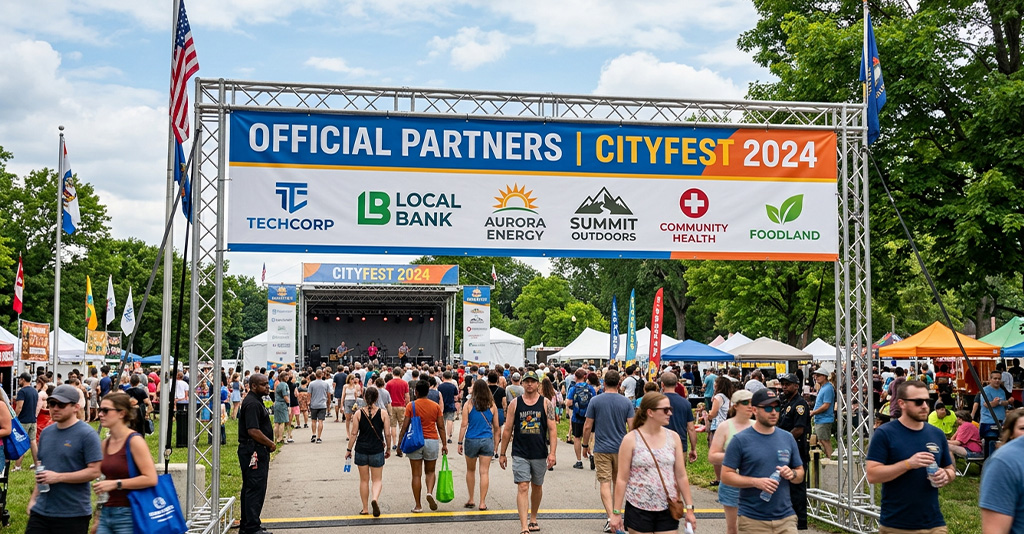
Spring and summer are peak seasons for golf tournaments, outdoor events, fundraisers, and local fairs, and if you’ve been to enough of them, you’ve probably noticed that some events feel organized and memorable while others feel kind of thrown together.
Think about the last outdoor event you attended.
Did everything feel easy to navigate? Were sponsors clearly visible? Did it feel polished or a little chaotic?
The difference usually comes down to how well the event is planned and presented as a complete marketing system.
Attendees don’t experience your event one piece at a time; they experience the entire environment all at once.
If signage, sponsor materials, and promotional items aren’t working together, people notice, even if they can’t explain why.
The most successful outdoor events are built around cohesive branding and an event experience strategy built from multiple systems working together, not separate pieces planned independently.
The most effective golf tournaments, fundraisers, fairs, and community events typically combine:
- Clear operational signage that improves event flow
- Strong sponsor visibility throughout the event
- Consistent branding across signage, displays, and promotional materials
- Promotional products that extend brand visibility after the event ends
When these elements work together cohesively, events feel more professional, easier to navigate, and more memorable for both attendees and sponsors.
Let’s break down how to get the most out of your outdoor event.
Topics
Why Event Branding Matters (More Than You Think)
The 3 Systems Every Outdoor Event Needs
Choosing the Right Promotional Items for Your Event
6 Common Event Mistakes That Undermine Everything
5 Pro Tips to Building a Cohesive Event Brand
When to Start Planning (Earlier Than You Think)
Outdoor Event Branding Checklist
Bringing Your Outdoor Event Together
Frequently Asked Questions (FAQ)
Planning an Upcoming Outdoor Event?
Why Event Branding Matters (More Than You Think)
Most event planning focuses on logistics:
- Booking the venue
- Scheduling activities
- Coordinating vendors
That’s all very important, but it’s not what people remember.
They remember how the event made them feel, and that experience is heavily shaped by your event branding strategy.
Event branding is the combination of signage, sponsor visibility, promotional materials, and visual consistency working together to create a cohesive and memorable attendee experience.
When an event branding system is done well, it improves:
Event Flow
People know where to go without asking. Registration is easy. Navigation is clear. If people have to stop and ask where to go, your system is already breaking down.
Sponsor Visibility
Sponsors are easy to find and clearly represented, which is exactly what they’re paying for. Sponsors don’t pay to be present; they pay to be seen.
Strong sponsor visibility helps reinforce sponsor value, improve attendee brand recognition, and increase the likelihood of sponsors returning for future events.
Professionalism
The event feels organized, intentional, and worth attending again. People decide within minutes whether your event feels credible.
Memorability
It looks good. It photographs well. People share it.
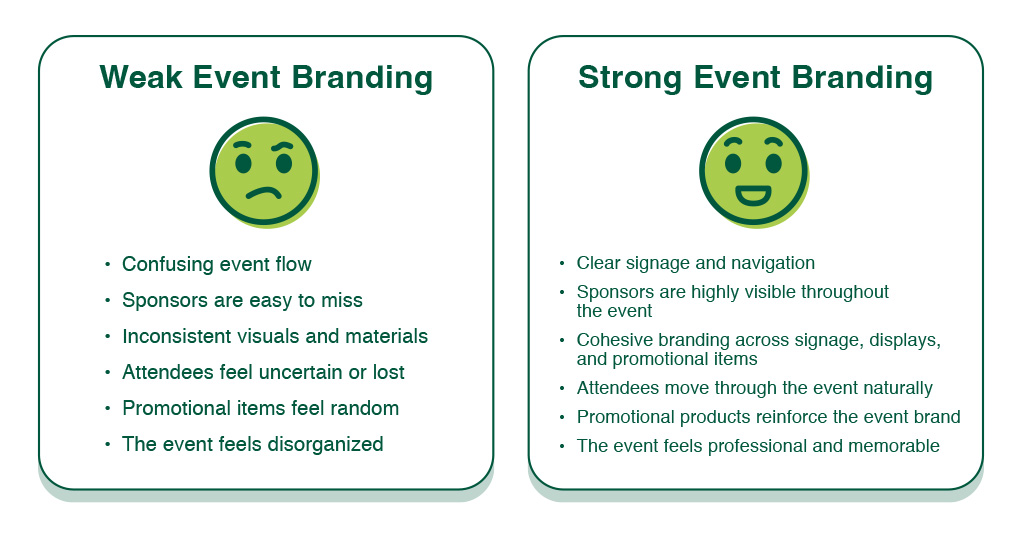
If it’s not done well, people get confused, sponsors get overlooked, and the whole event can feel less polished than it should.
Event organizers increasingly recognize that cohesive branding and clear event presentation play a major role in attendee experience, sponsor satisfaction, and long-term event growth.
The 3 Systems Every Outdoor Event Needs
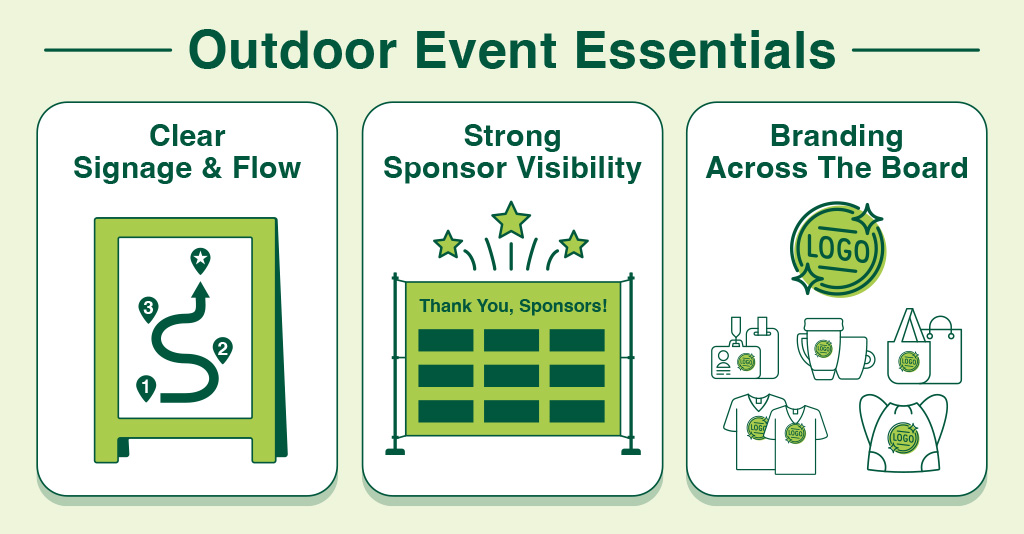
The most successful outdoor events typically combine three core systems: operational signage that improves attendee flow, sponsor visibility that reinforces event value, and cohesive branding elements that create a more memorable overall experience. Strong events are built from systems that work together, not independent pieces put next to each other.
#1 – Operations – Your Event Flow System
This is what keeps your event running smoothly and includes:
- Parking signage
- Directional signs
- Registration and check-in banners
From an attendee’s perspective, this is simple: “Do I know where I’m going, or am I guessing?”
If people are wandering around asking for directions, the system isn’t working.
Clear, well-placed signage removes friction and keeps everything moving. It’s not just about having signage that pops, it’s about placing it where people naturally look as they move through the event.
#2 – Revenue Driver – Your Sponsor Visibility System
Sponsors aren’t just supporting the event – they’re investing in visibility and brand awareness.
Let’s consider a golf tournament. A system for this type of outdoor event could include:
- Tee signs
- Hole sponsor signage
- Banners at high-traffic areas
Here’s the reality: If attendees don’t notice your sponsors, your sponsors won’t see the value. If they don’t see the value, they won’t come back next year.
High-traffic placement matters just as much as the signage itself. A well-designed tee sign that no one walks past doesn’t deliver the value that you’re looking for.
#3 – Atmosphere – Your Brand Experience System
This is where your events go from “functional” to “viral,” and it’s often the difference between an event that feels cohesive and one that feels like a collection of unrelated experiences.
It includes:
- Feather flags
- Large-format banners
- Entry signage
- Branded tents or displays
This is what attendees notice immediately even if they don’t consciously recognize it. Strong visual branding helps outdoor events feel more organized, immersive, and memorable from the moment attendees arrive.
It’s what makes attendees and sponsors go from “This is a local event” to “I’m coming back next year!”
Choosing the Right Promotional Items for Your Event

Branded promotional items are one of the most valuable parts of any event.
Signage gets people’s attention in the moment.
Conversations happen during the event.
But promotional items are what people take with them.
In many cases, they’re the only part of your event people interact with after it’s over. This system includes:
- Branded golf balls, towels, and apparel
- Tote bags and giveaways for fairs, markets, and community events
- Flyers, brochures, and sell sheets for businesses looking to generate leads
- Swag items like branded merchandise that keep your name visible
The key is choosing items that are useful, relevant, and aligned with your event and your brand.
A well-chosen promotional item turns a one-day event into ongoing brand exposure.
In fact, studies show that 90% of people who receive a promotional product remember the brand name, and 73% are more likely to do business with a brand that gave them one.
Done right, it reinforces your brand, supports your sponsors, and extends the impact of your event well beyond the day itself.
Effective promotional products help outdoor events increase brand recall, reinforce sponsor visibility, and create continued engagement even after the event is over.
However, not all promotional items deliver the same value. The goal isn’t to hand out as many items as possible, it’s to choose the right items for your audience, event, and objectives.
Here’s how to approach it:
Match the Item to the Event Type
Different events call for different types of promotional materials.
- Golf tournaments: golf balls, towels, hats, and apparel
- Community events and fairs: tote bags, giveaways, family-friendly items
- Business-focused events: brochures, sell sheets, branded materials that support follow-up
When the item fits the event, it feels intentional, and you’re more likely to earn the coveted brand recall you’re looking for.
Prioritize Usefulness Over Novelty
It’s easy to choose items that seem fun or unique, but it’s important to balance that against what people will actually use long term. If not, they don’t deliver value after that first point of contact.
Useful items:
- Stick around longer
- Get repeated exposure
- Create stronger brand recall
If it ends up in a drawer or gets thrown away, it’s not working. The best promotional items are the ones that make sense for the people receiving them.
A homeowner-focused business might get more long-term value from something practical like a branded oven mitt or reusable tote bag, while a tech company may benefit more from items like branded phone chargers or desk accessories people use every day.
When the item aligns with your audience, it’s more likely to get used and remembered.
Think Beyond the Day of the Event
The best promotional items continue working after the event ends.
Ask yourself:
- Will someone use this again?
- Will they see my branding more than once?
- Does it connect back to my event or business?
Your goal is simple: Turn a one-day interaction into ongoing visibility.
6 Common Event Mistakes That Undermine Everything
Even well-intentioned events can run into the same problems over and over again. Avoid these common mistakes to ensure your brand delivers a top-notch experience sponsors and attendees will remember, share, and visit in the future.
#1 – No Cohesive Plan
Ordering signage, banners, and promo items one at a time without a unified vision leads to a disconnected experience.
It shows.
A disconnected event branding strategy creates an inconsistent attendee experience and makes the event feel less professional overall.
When signage, sponsor materials, and promotional products are planned separately instead of together, the event experience often feels fragmented and less memorable.
#2 – Using Multiple Vendors
This is a big one because different vendors often mean:
- Inconsistent colors
- Different material quality
- Mismatched branding
What should feel cohesive ends up feeling pieced together, and it can lead to last-minute adjustments, delays, and a final setup that feels inconsistent.
Or worse, missing or late orders that don’t show up when you need them to.
#3 – Ordering Too Late
Last-minute orders limit your options, increase costs, and can result in rushed or inconsistent materials.
Rushed production limits your ability to make thoughtful decisions and can show in the final result.
#4 – Treating Promotional Items as an Afterthought
Promotional items are often decided last or added in without much thought. That usually leads to:
- Items that don’t match the event or target audience
- Inconsistent branding
- Missed opportunities to reinforce your message
When promotional materials aren’t planned as part of your overall system, they lose their impact.
Like everything else, they should be intentional, consistent, and aligned with your event goals.
#5 – Treating Sponsors as an Afterthought
Sponsors are more likely to return when they receive consistent visibility, strong event placement, and a professional sponsorship experience throughout the event.
Remember the importance of sponsorship being integrated into your event experience and show them that their investment is being prioritized at every reasonable touchpoint.
#6 – Poor Event Flow
If people don’t know where to go, they get frustrated, and that frustration becomes their lasting impression.
Clear directional signage, registration displays, parking signs, and strategically placed banners help guide attendees naturally through your event.
When people can move through your event without confusion, their entire experience feels smoother, more organized, and more professional.
5 Pro Tips to Building a Cohesive Event Brand
If you want your event to feel polished and professional, this is where to focus first.
#1 – Think of Systems, Not Pieces
Signage, sponsor materials, promotional products, and printed assets should all work together as part of a unified event branding strategy rather than being treated as separate decisions.
When every element feels connected visually and strategically, the event becomes easier to navigate, more professional, and more memorable for attendees and sponsors alike.
#2 – Work with One Partner
One of the easiest ways to improve the quality and consistency of your event is to work with a single partner who can handle everything from start to finish.
Coordinating signage, promotional products, printed materials, and event branding through one provider helps reduce inconsistencies, simplifies communication, and creates a more cohesive attendee experience.
When signage, promotional items, and printed materials are sourced from different vendors, things can quickly become inconsistent:
- Colors don’t match exactly
- Materials vary in quality
- Branding feels disconnected
- Communication becomes fragmented
A unified approach makes a real difference. By working with one experienced printing partner, you can coordinate:
- Signage and banners
- Promotional items and apparel
- Brochures, sell sheets, and printed materials
- Design and layout across all assets
The result is a more cohesive, professional event with fewer moving parts to manage and fewer opportunities for things to go wrong.
It also gives you a single point of contact, making communication simpler and helping ensure everything is aligned from the start.
If you’re planning an upcoming event and want everything to work together seamlessly, it’s worth starting with a coordinated approach from day one.
You can request an estimate here to get the process started.
#3 – Design for Consistency Across Everything
When everything matches, your event feels intentional. When it doesn’t, people notice, even if they can’t explain why.
Your branding should carry across:
- Signs
- Banners
- Apparel
- Giveaways
Same colors. Same fonts. Same messaging.
#4 – Map Your Event in Zones
This helps ensure nothing gets missed and avoids overcrowding one area while neglecting another.
Break your event into key areas:
- Entry
- Registration
- Activity areas
- Sponsor hotspots
Then plan what each zone needs.
#5 – Standardize Sponsor Assets Early
Create consistent templates for:
- Signs
- Banners
- Sponsor placements
This avoids last-minute scrambling and keeps everything aligned.
It also speeds up approvals and reduces needless back-and-forth conversations as your event approaches, saving you valuable time that is better spent on other aspects of your event planning.
When to Start Planning (Earlier Than You Think)
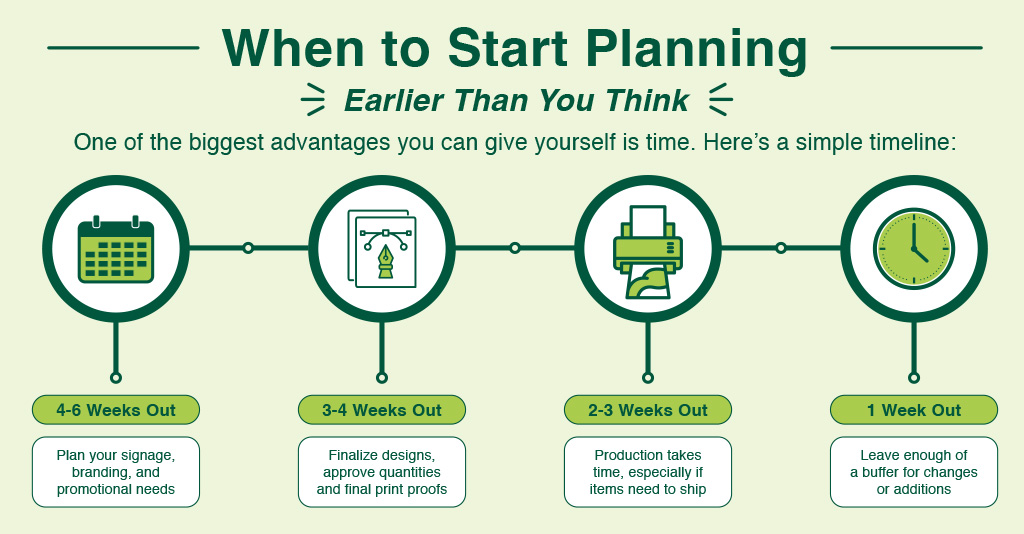
One of the biggest advantages you can give yourself is time. Here’s a simple timeline:
- 4–6 weeks out: Plan your signage, branding, and promotional needs
- 3–4 weeks out: Finalize designs and approvals
- 2–3 weeks out: Production
- 1 week out: Buffer for changes or additions
Waiting too long compresses this entire timeline, and that’s when mistakes start happening.
The earlier you start, the more flexibility you have, and the better the result will be.
Early planning also gives event organizers more time to coordinate branding, sponsor materials, signage, and promotional products so the entire event feels more polished and cohesive.
Outdoor Event Branding Checklist
Before your event, make sure you’ve covered the essentials that help create a smooth, professional, and cohesive attendee experience:
- Directional and parking signage planned
- Registration and check-in areas clearly marked
- Sponsor signage finalized and properly placed
- Branding consistent across signs, banners, apparel, and promotional items
- Promotional products selected for your target audience
- High-traffic sponsor visibility areas identified
- Event layout and attendee flow reviewed
- Designs approved before production deadlines
- Extra time built in for changes or reprints
- Printed materials, signage, and promotional items coordinated together
A cohesive event brand isn’t created by accident.
Planning these elements together helps your event feel more organized, professional, and memorable from start to finish.
Bringing Your Outdoor Event Together
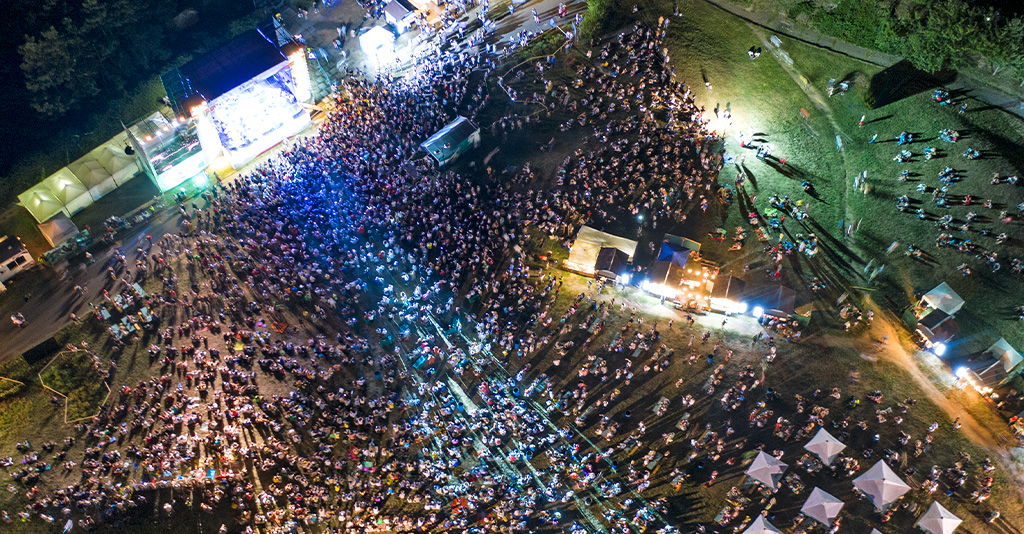
A successful outdoor event depends on more than logistics alone.
The most effective golf tournaments, fundraisers, fairs, and community events combine clear event flow, strong sponsor visibility, cohesive branding, and promotional materials that continue reinforcing the experience long after the event ends.
From the moment someone arrives to the moment they leave, every detail contributes to how your event is experienced and shared with others.
When your signage, sponsor materials, and promotional items are planned as a cohesive system, everything works better:
- Attendees have a smoother experience
- Sponsors get the visibility they expect
- Your event feels more professional overall
When everything works together, people notice.
Your event will create a smoother attendee journey, stronger sponsor exposure, and a more polished overall presence for the businesses and organizations behind it.
Frequently Asked Questions (FAQ)
What makes an outdoor event feel professional?
A professional outdoor event uses cohesive signage, branding, sponsor visibility, and promotional materials that create a smooth and organized attendee experience.
Why is event branding important for golf tournaments?
Event branding helps golf tournaments improve sponsor visibility, attendee experience, and overall memorability while reinforcing the credibility of the event.
What promotional items work best for outdoor events?
The best promotional items are practical, relevant to the audience, and likely to be reused after the event, such as tote bags, golf towels, hats, or branded tech accessories.
How early should you start planning event signage and promotional materials?
Most outdoor events should begin planning signage and promotional materials at least 4–6 weeks before the event to allow time for design, approvals, production, and adjustments.
Why should outdoor events use one printing and signage partner?
Using one vendor helps maintain consistent branding, simplifies communication, and reduces the risk of mismatched materials or production delays.
Planning an Upcoming Outdoor Event?
If you’re organizing a golf tournament, fundraiser, or outdoor event, having the right partner can be the difference between success and failure.
Our team can help you plan, design, and produce everything as one cohesive system so your event runs smoothly, looks professional, and delivers a consistent experience your attendees and sponsors will remember.
From signage and sponsor materials to promotional products and printed assets, coordinating every element together creates a stronger and more memorable event experience.
Contact us today to get started.